About All Tours Bus ToursSelf-Guided Audio ToursPrivate ToursFrom Salt Lake CityAnd Yellowstone Tours Directions Hours & Fees
Find Tours 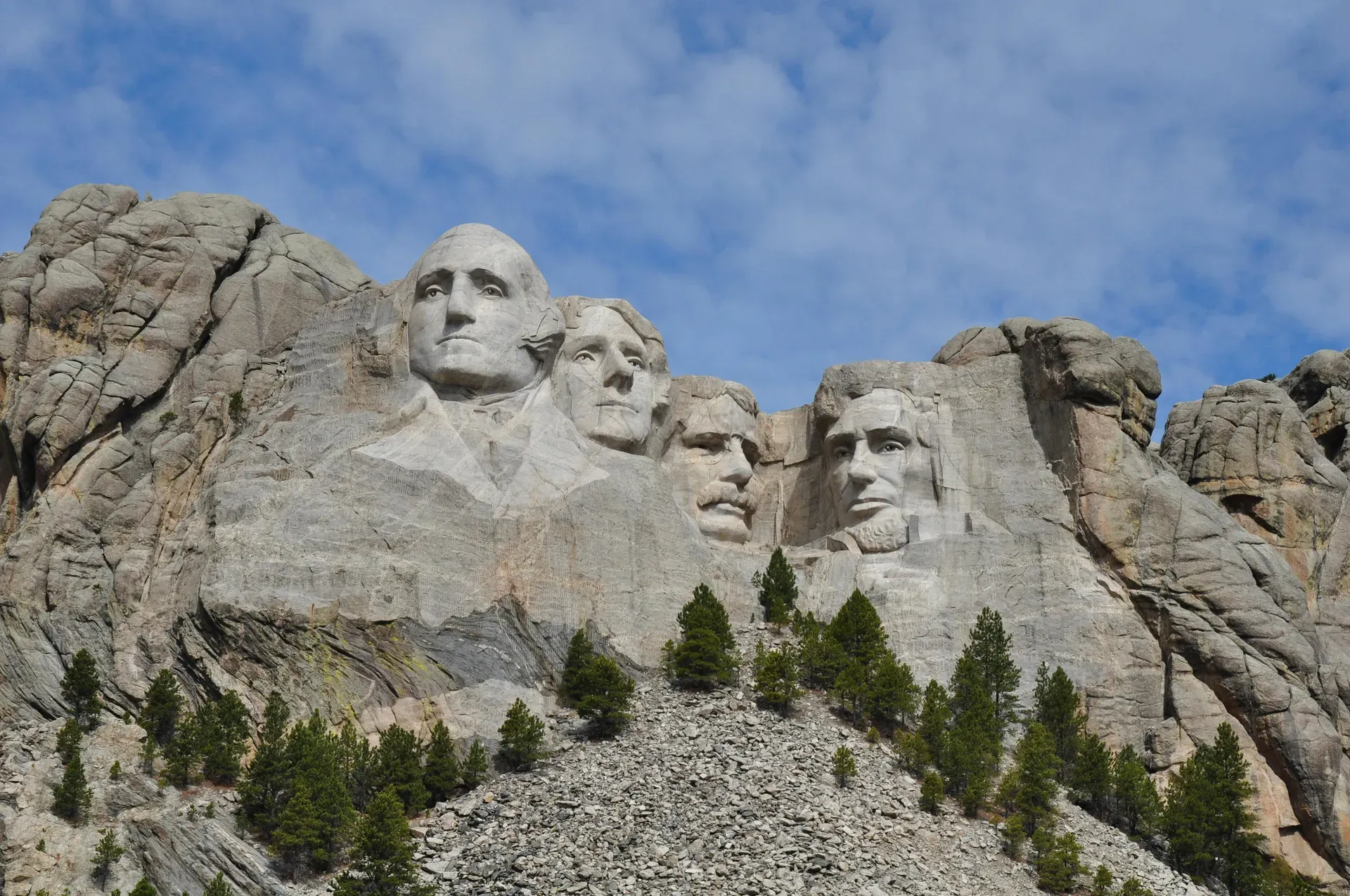
Mount Rushmore features the 60-foot-tall granite faces of four prominent United States presidents carved into the Black Hills of South Dakota. Walk the 0.6-mile Presidential Trail for close-up views of the colossal sculpture, and read informative plaques detailing the 14-year engineering project and its controversial history on sacred Lakota land.
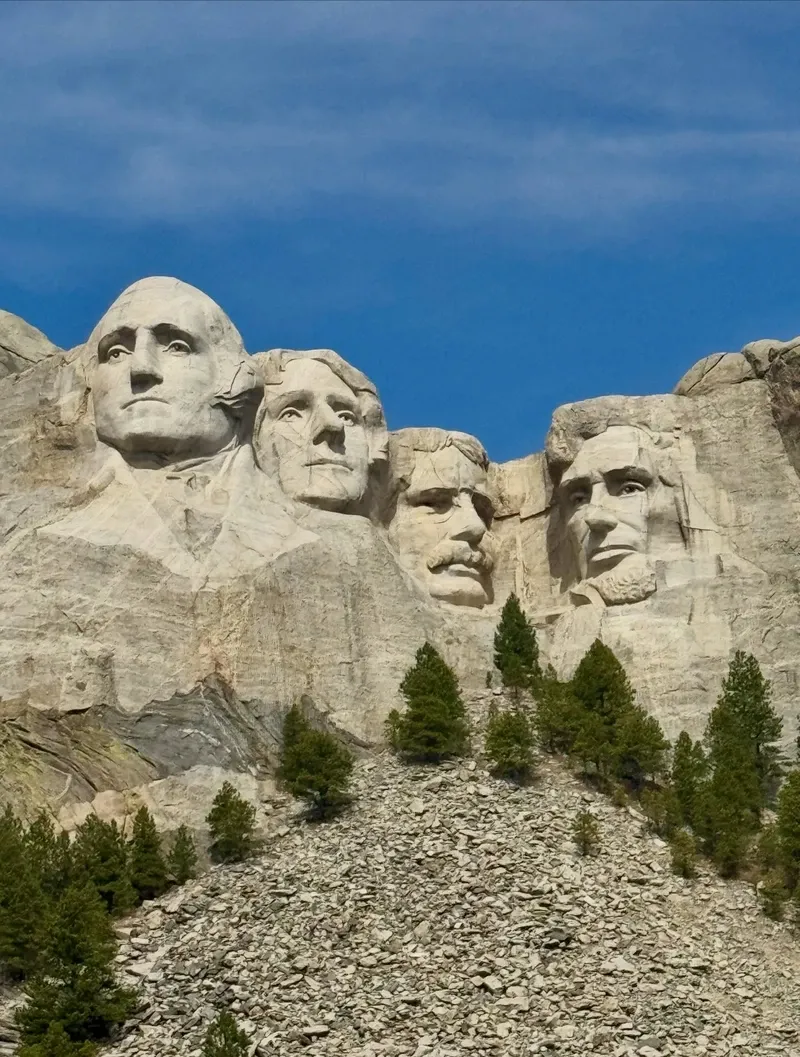
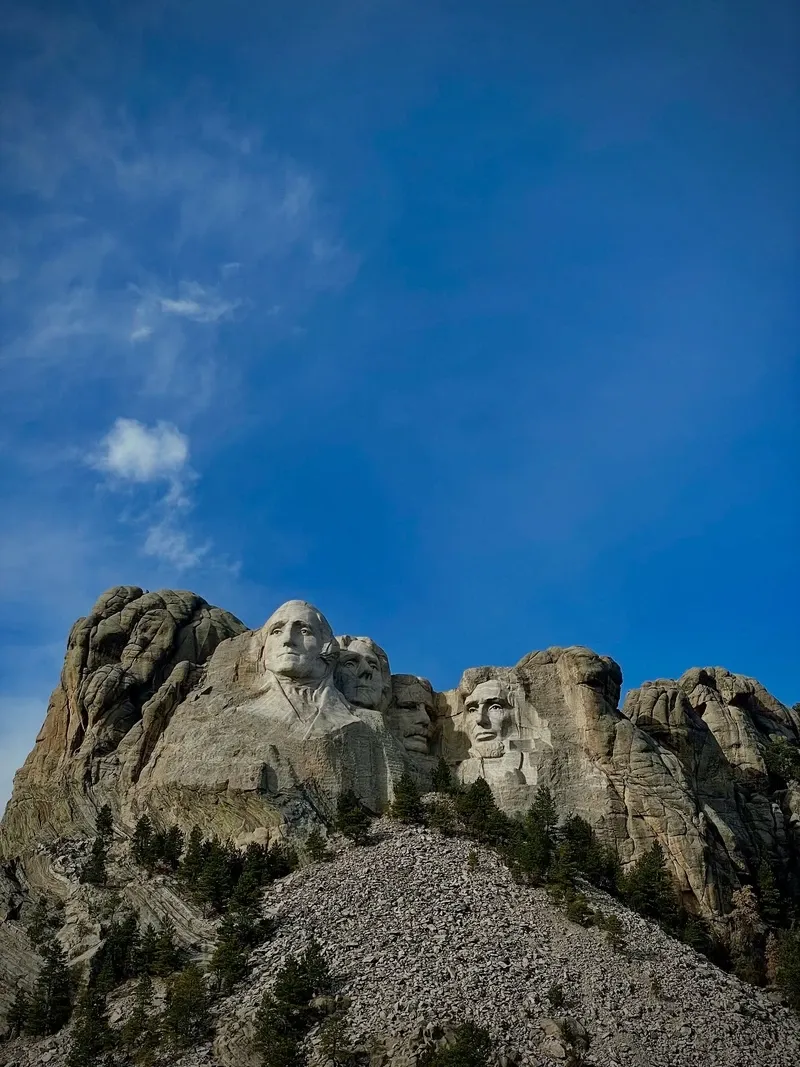
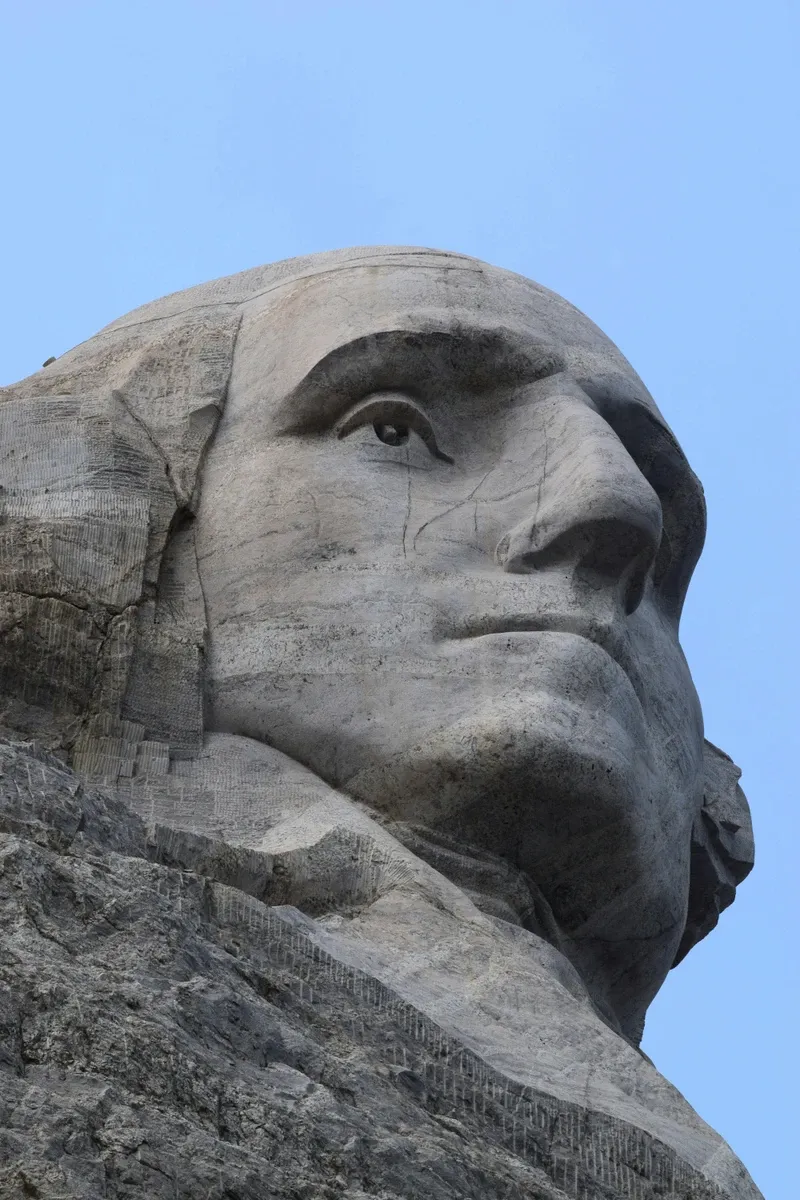
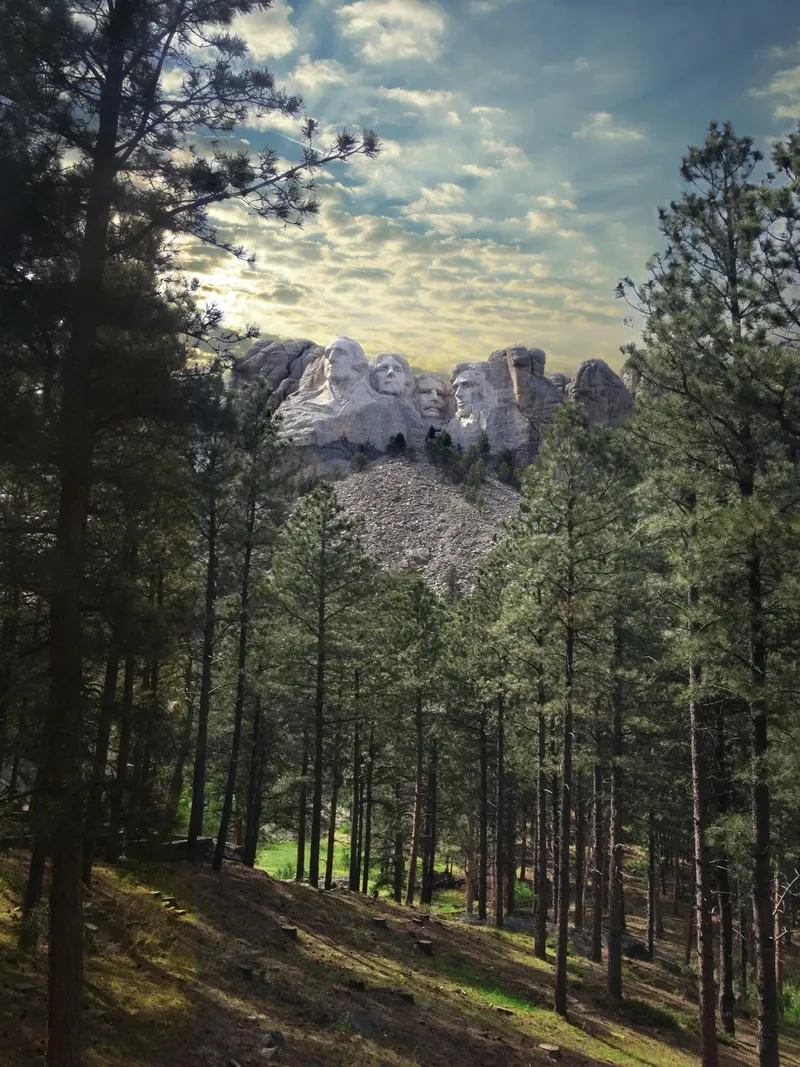
Find Guided ToursMount Rushmore National Memorial is a massive monumental sculpture carved into the granite spine of the Black Hills in western South Dakota. Located near the town of Keystone, the 1,278-acre site centers on the 60-foot-tall faces of four United States presidents: George Washington, Thomas Jefferson, Theodore Roosevelt, and Abraham Lincoln. The memorial sits at an elevation of 5,680 feet among dense ponderosa pine forests.
South Dakota historian Doane Robinson originally conceived the project in 1923 to increase regional tourism. Sculptor Gutzon Borglum selected the four presidents to represent the first 150 years of American history, symbolizing the nation's founding, expansion, development, and preservation. Construction began on October 4, 1927, utilizing a team of 400 workers. Over 14 years, crews used dynamite to blast away 450,000 short tons of rock. The project was officially completed on October 31, 1941, without a single fatality.
Known as America's "Shrine of Democracy," the memorial carries a deeply controversial history. Before it was named after a New York lawyer in 1885, the mountain was known to the Lakota Sioux as Tunkasila Sakpe Paha, or Six Grandfathers Mountain. It served as a sacred place of prayer and spiritual devotion for the tribe.
The monument was carved directly into this sacred land in violation of the 1868 Treaty of Fort Laramie. Today, Mount Rushmore stands as a patriotic symbol for millions of annual visitors, but it also serves as a focal point for Native American protests demanding the return of their ancestral territory. Borglum's original vision intended for the presidents to be carved from head to waist, but funding constraints and his death in 1941 left the 60-foot faces as the final result.
Discover the full history and cultural significance on our About page.
Hike the 0.6-mile loop trail to the base of the mountain for dramatic, up-close angles of the 60-foot granite faces. Along the route, you will navigate 422 stairs and read informative plaques detailing both presidential history and local Native American heritage.
From late May to late September, the memorial hosts a nightly flag-lowering event featuring national songs and a ranger talk. The program culminates as high-tech, eco-friendly LED lights dramatically illuminate the four sculpted faces against the dark Black Hills sky.
View Gutzon Borglum's original 1:12 scale model used to map the colossal carvings. Park rangers give daily talks inside this historic building, explaining the complex pointing machine process and detailing the lives of the 400 workers who blasted 450,000 short tons of rock.
Stop by the Memorial Team Ice Cream shop inside the Carvers' Café to cool off with a unique historical treat. They serve a famous vanilla ice cream made exactly from Thomas Jefferson's original 1780 recipe, providing a sweet conclusion to your three-hour visit.
Hand-picked tours with free cancellation and verified reviews
 Free Cancellation 9h Free Cancellation 9h
  Free Cancellation 9h
  Free Cancellation
  Free Cancellation
  8h
8h  Free Cancellation 10h
  Free Cancellation 4h 30min
 The ideal times to visit Mount Rushmore are during the shoulder months of May, September, and October. These periods offer pleasant weather and significantly smaller crowds compared to the peak season.
Spring brings comfortable temperatures ranging from 50°F to 60°F. May is one of the best months to visit, providing pleasant weather and allowing visitors to avoid massive summer crowds.
These are the worst months to visit due to extreme crowds and heavy congestion. To find parking and avoid the rush, you must arrive before 9:00 a.m. or after 3:30 p.m.
September and October are prime months to visit, featuring pleasant weather and minimal congestion. By November, temperatures drop and scheduled ranger programs cease for the winter season.
Winter visits are challenging. Temperatures frequently drop to 40°F or lower, bringing cold nights and snow. There are no scheduled ranger programs, and visitor buildings close on December 25th.
Mount Rushmore's grounds and parking structure are open daily year-round, except on December 25th when buildings close but grounds remain accessible, weather permitting. Operating hours vary by season. From March 10 to September 30, the grounds are open from 5:00 a.m. to 11:00 p.m. In October, hours shift to 5:00 a.m. to 9:00 p.m., and from November 1 to March 9, they open between 6:00 a.m. and 7:00 a.m. until 9:00 p.m. The Lincoln Borglum Visitor Center operates from 8:00 a.m. to 5:00 p.m. between November 1 and May 22, with extended hours until 10:00 p.m. during the peak summer season from May 23 to August 9.
| Category | Price |
|---|---|
| Memorial Entrance | Free |
| Private Vehicle Parking (Cars, Motorcycles, RVs) | $10.00 |
| Senior Parking (62 and older) | $5.00 |
| Active Duty Military Parking | Free |
| Commercial Tour Bus Parking | $50.00 |
| Nonprofit Educational Bus Parking | $25.00 |
Mount Rushmore does not charge an entrance fee, but visitors must pay a concession-operated parking fee. National Park Service passes, including the America the Beautiful pass, do not cover this parking charge. Private vehicle parking tickets are valid for unlimited entry for one year from the purchase date, while bus parking is valid for 24 hours. No advance reservations are required for standard entry.
For complete schedules and ticket prices, visit our Hours & Fees page.
Visitors reach Mount Rushmore primarily by driving or booking a private tour from Rapid City, located 35 miles away. There is no public transportation available to the memorial.
📍 South Dakota Highway 244, Keystone, SD
Driving is the primary way to access the memorial since public transit is unavailable. Visitors traveling by personal vehicle should exit Interstate 90 at Rapid City. From there, follow U.S. Highway 16 south to the town of Keystone. Finally, take South Dakota Highway 244 directly to the main entrance. The route covers 35 miles.
Rapid City Regional Airport serves as the closest aviation facility to the memorial. It is situated on South Dakota Highway 44, about 35 miles away. Because there is no public bus or train service connecting the airport to the site, arriving passengers must rent a car or arrange a private tour. The drive to the memorial takes roughly 35 minutes.
Private companies like Mount Rushmore Tours operate standard sightseeing bus excursions originating from Rapid City. These packages provide round-trip transportation and professional guide narration throughout the trip. In addition to visiting the memorial itself, the route typically includes stops at other prominent landmarks within the Black Hills. The full excursion lasts about nine and a half hours.
For detailed transport options and routes, visit our Directions page.
Plan your visit before 9:00 a.m. or after 3:30 p.m. during June, July, and August. This timing helps you bypass heavy congestion and secure parking easily. You will also benefit from cooler temperatures and softer lighting for photographing the monument.
Standard National Park passes do not cover the $10 private vehicle parking fee. Pay and validate your ticket at the automated machines located in the garages or near the entrance before returning to your car. You must insert this validated ticket at the gate to exit.
Enter the 0.6-mile Presidential Trail from the Grand View Terrace instead of the Sculptor's Studio. Taking this route provides an easier walk with fewer uphill sections. Starting from the studio requires a strenuous climb up 422 steep stairs to reach the base of the mountain.
Mount Rushmore sits at an elevation of 5,680 feet above sea level. Weather conditions can shift rapidly at this altitude, and temperatures often drop quickly. Bring a light jacket or sweater, particularly if you plan to stay for the evening lighting ceremony during the summer.
Animals are strictly prohibited on the main plaza, the Avenue of Flags, and all walking trails. You must keep pets restricted to the parking garages and the two designated pet walking areas adjacent to them. Consider arranging off-site boarding if you want to explore the entire 1,278-acre site.
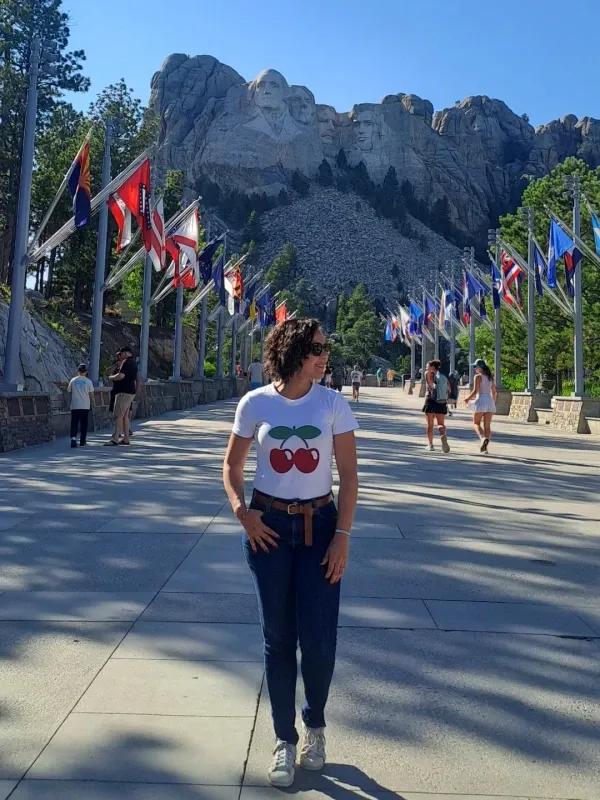
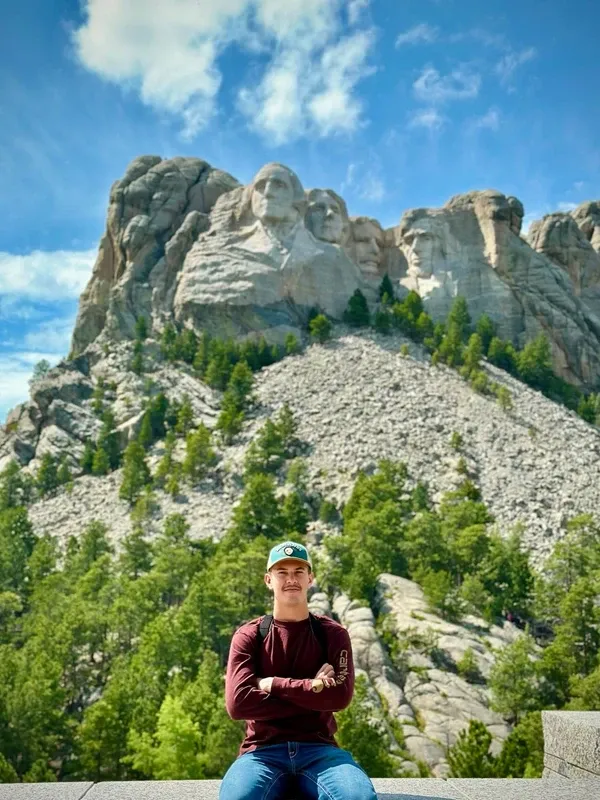
The Grand View Terrace is the primary platform for capturing unobstructed photographs of the four presidents. When asking fellow tourists to take a picture of your group, explicitly ask them to include the 60-foot carved faces. Many well-meaning visitors accidentally crop the massive granite sculpture out of the frame.
This massive mountain carving honors Lakota leader Crazy Horse and serves as a direct response to Mount Rushmore. Visitors can tour the Indian Museum of North America and watch the nightly laser light show.
Visitors can drive the famous Wildlife Loop Road to spot free-roaming bison, burros, and pronghorn. The park also features scenic routes like the Needles Highway and recreation areas such as Sylvan Lake.
Ranked as the third-longest cave in the world, this monument contains over 120 miles of explored passages filled with calcite crystals. Guided tours take visitors underground to view rare boxwork and frostwork formations.
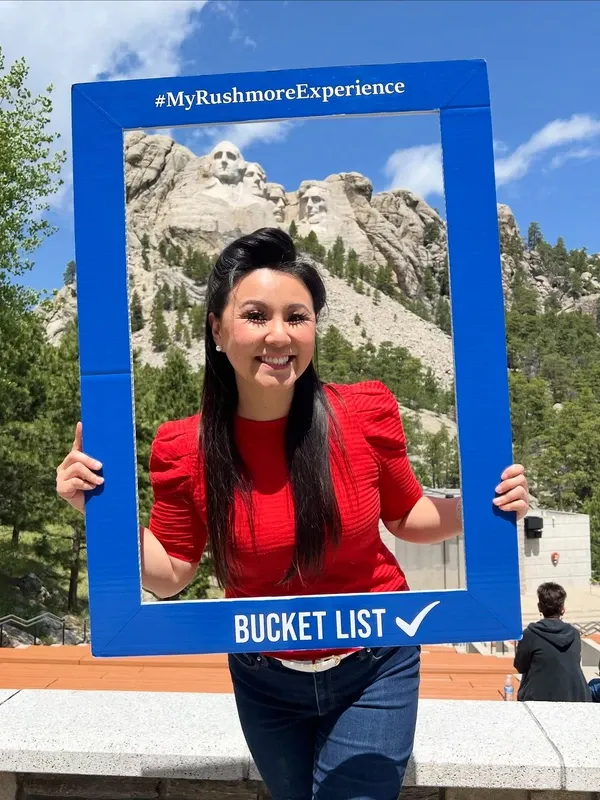
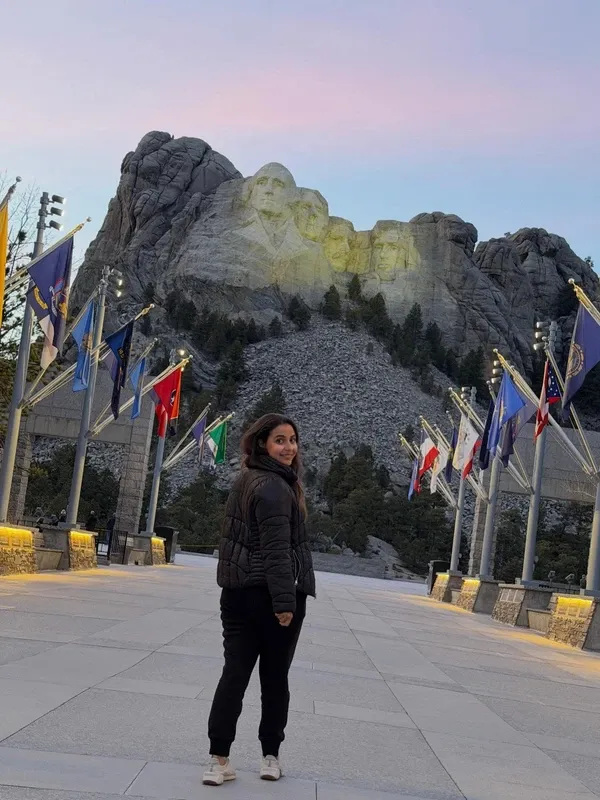
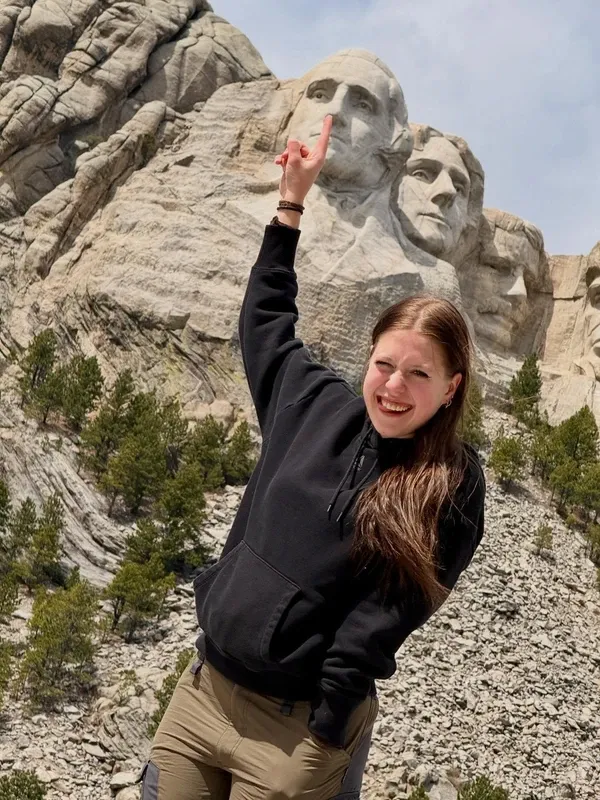
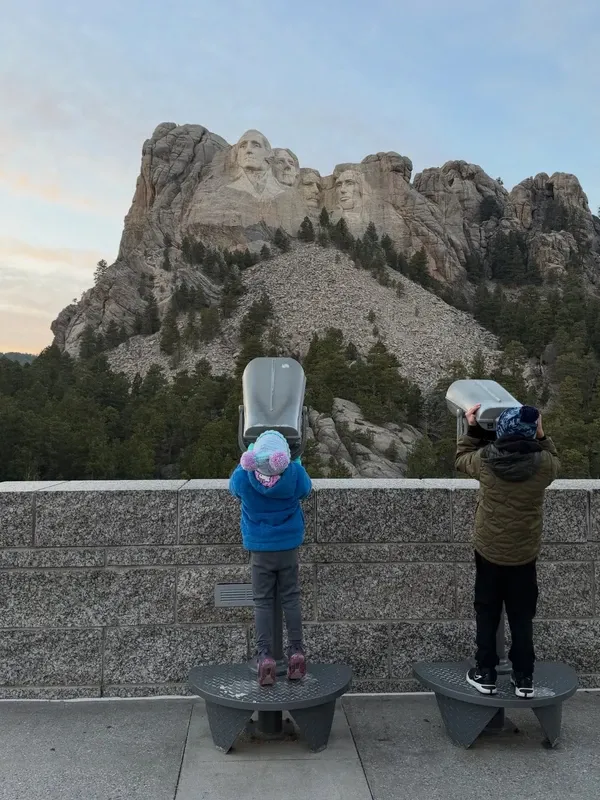
Read what travelers share about their experience visiting Mount Rushmore — from practical tips to personal highlights.
There is no entrance fee for the memorial, but visitors must pay a parking fee to the private concessionaire. Parking costs $10 for private vehicles, $5 for seniors 62 and older, and is free for active-duty military. National Park Service passes like the America the Beautiful pass do not cover this cost.
A typical visit lasts about three hours, giving you enough time to walk the 0.6-mile Presidential Trail, explore the museum, and watch the evening lighting ceremony. If you only want to view the monument from the Grand View Terrace and take photos, one to two hours is sufficient.
No public bus or train services travel to the memorial. Visitors must drive 35 miles from Rapid City via Highway 16 and Highway 244, rent a car from the Rapid City Regional Airport, or book a private guided bus tour. Standard sightseeing bus tours run about $125 per adult.
You do not need a reservation or permit for standard entry and parking at the memorial. Permits are only required for special events, demonstrations, or commercial filming and photography involving groups of nine or more people.
Sturdy walking shoes are highly recommended for navigating the paved trails and the 422 stairs on the Presidential Trail. You should also bring extra clothing layers, as the site sits at an elevation of 5,680 feet and temperatures can drop rapidly in the evenings.
The memorial is highly accessible, with elevators in the parking garages and flat paved surfaces leading to the Grand View Terrace and visitor centers. Free manual wheelchairs are available at the Information Center on a first-come, first-served basis. The first 0.2 miles of the Presidential Trail are wheelchair-accessible, but the remainder contains steep stairs.
The memorial grounds and parking structure open daily year-round, operating from 5:00 a.m. to 11:00 p.m. between March 10 and September 30. During the winter months, the grounds close earlier at 9:00 p.m. All visitor buildings are closed on December 25th, but the grounds remain open if weather permits.
Pets are strictly prohibited on the main plaza, the walking trails, and the Avenue of Flags. You may only bring pets into the parking garages and the two designated pet walking areas adjacent to them.
Browse verified tours with free cancellation and instant confirmation.
Find Tours