About All Tours Bus ToursSelf-Guided Audio ToursPrivate ToursFrom Salt Lake CityAnd Yellowstone Tours Directions Hours & Fees
Find Tours 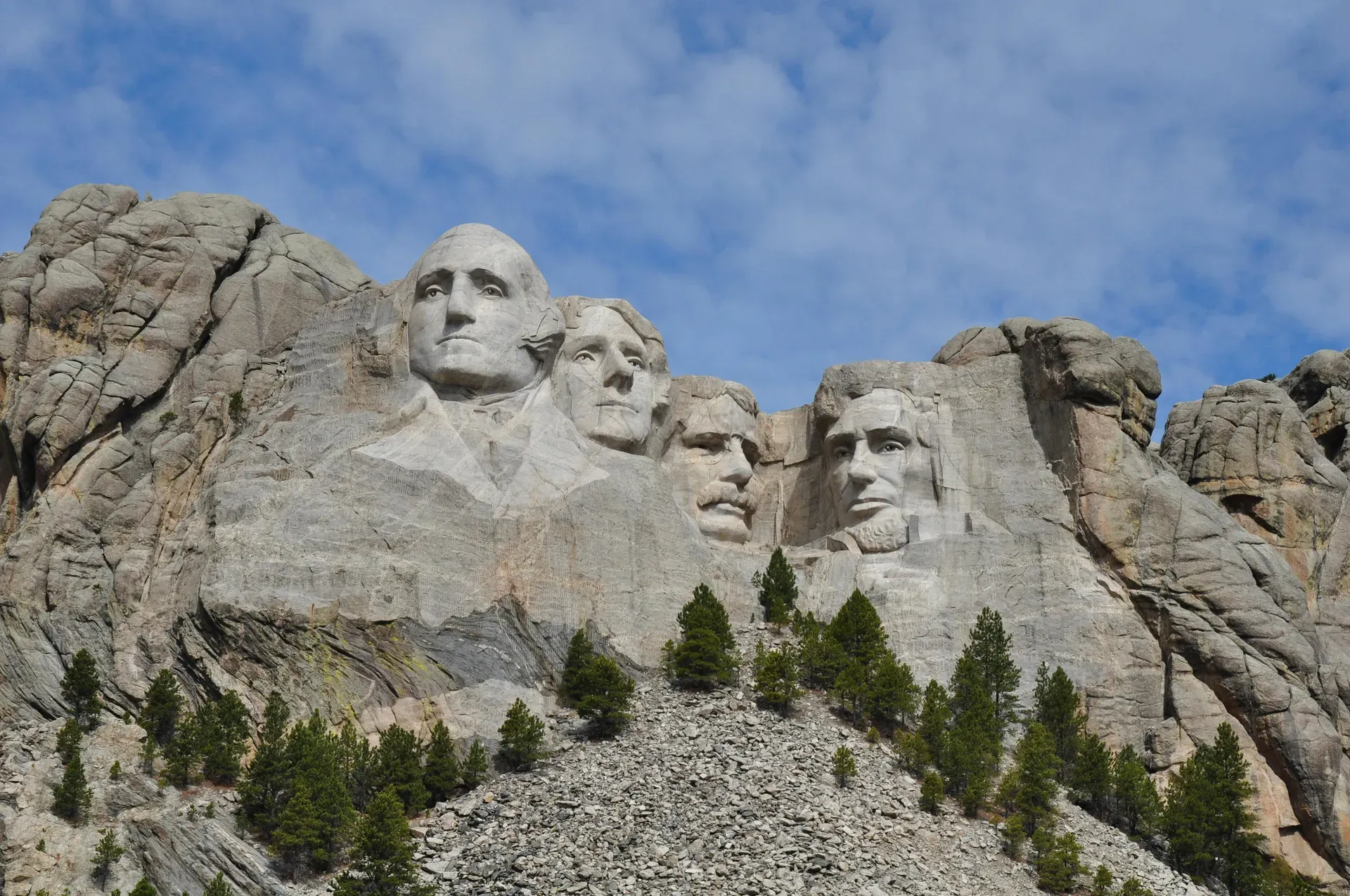
Mount Rushmore National Memorial features 60-foot-tall granite faces of four United States presidents carved into the Black Hills of South Dakota. The 1,278-acre site draws over two million annual visitors to view the massive sculpture and walk the surrounding ponderosa pine forests.
Sixty-foot granite faces of George Washington, Thomas Jefferson, Theodore Roosevelt, and Abraham Lincoln stare across the Black Hills of western South Dakota. Mount Rushmore National Memorial covers 1,278 acres near the town of Keystone, bordering the Black Elk Wilderness. Visitors walk the 0.6-mile Presidential Trail to view the massive sculpture from different angles, passing through dense ponderosa pine forests. The site includes the Lincoln Borglum Visitor Center, where interactive exhibits detail the 14-year construction process, and the Sculptor's Studio housing the original 1:12 scale model.
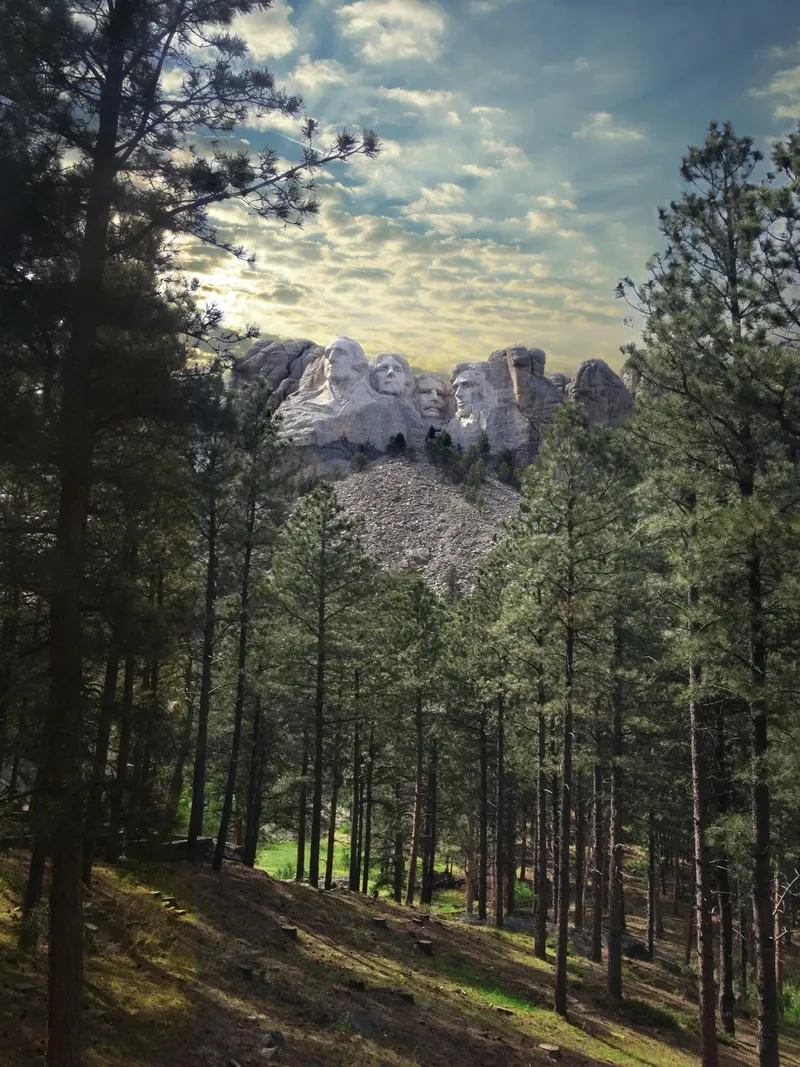
Ponderosa pines frame the pale gray granite against the sky. The scent of pine needles fills the air on the walk up to the Grand View Terrace. High-tech LED lights illuminate the faces during the evening lighting ceremony held nightly from late May to late September. Mountain goats, descendants of a herd gifted by Canada in 1924, frequently scale the rocky outcroppings around the memorial. The Grand View Terrace provides the primary, unobstructed sightline of the four presidents.
Summer crowds bring heavy congestion to the concession-operated parking facility. June, July, and August see the highest volume of the 2.5 million annual visitors, causing long lines at the Carvers' Café and crowded viewing platforms. Arriving before 9:00 a.m. or after 3:30 p.m. bypasses the worst of the traffic. Winter visits require heavy layers, as temperatures at the 5,680-foot elevation routinely drop below 40°F, and snow can limit access to the outdoor trails. The parking ticket costs $10 per private vehicle and remains valid for one year.
The memorial grounds open at 5:00 a.m. during the summer months, allowing early arrivals to watch the sunrise hit the east-facing granite. Visitors typically spend three hours exploring the museum, walking the paved trails, and attending ranger talks. Manual wheelchairs are available for free at the Information Center, and elevators connect all levels of the parking garages to the main entrance. Federal law strictly prohibits climbing the sculpture or flying drones anywhere within the memorial boundaries.
Travelers reach the site by driving 35 miles southwest from Rapid City along U.S. Highway 16 and South Dakota Highway 244. No public transportation routes the memorial, forcing visitors to rent cars or book private guided bus tours. Food and beverages are prohibited inside the Information Center, Lincoln Borglum Visitor Center, Sculptor's Studio, and Gift Shop. The Carvers' Café serves meals and features Memorial Team Ice Cream, which uses Thomas Jefferson's original 1780 vanilla recipe. Pets must remain in the parking garages or designated pet walking areas and cannot enter the main plaza or trails.
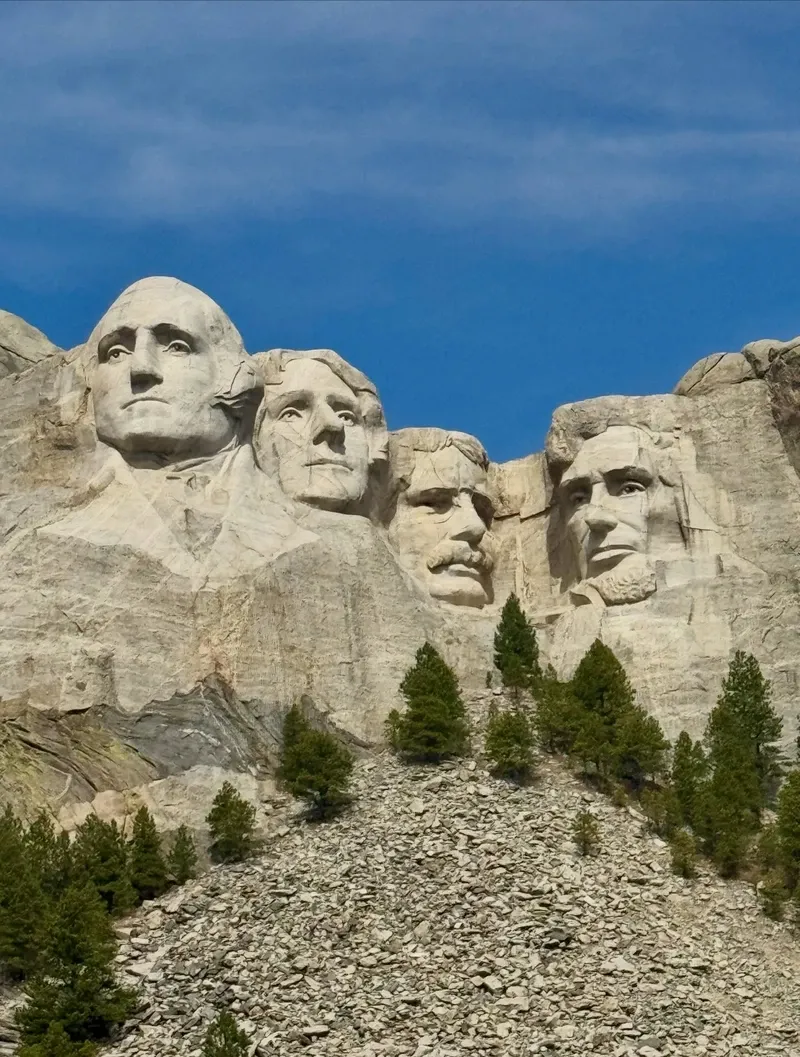
South Dakota historian Doane Robinson conceived the idea for a massive mountain carving in 1923. He wanted to boost regional tourism by sculpting western figures like Lewis and Clark, Red Cloud, or Buffalo Bill Cody into the granite pillars known as the Needles. Sculptor Gutzon Borglum rejected the Needles due to poor granite quality and instead selected Mount Rushmore. Borglum also changed the subjects to four American presidents to give the monument national appeal. The chosen mountain, known to the Lakota Sioux as Tunkasila Sakpe Paha (Six Grandfathers Mountain), sat on land guaranteed to the Sioux by the 1868 Treaty of Fort Laramie. The decision to carve the presidents into this specific peak sparked immediate and lasting controversy. The United States government had seized the territory in 1877 after the discovery of gold, and placing a federal monument here cemented that seizure in stone.
President Calvin Coolidge dedicated the site on August 10, 1927. Construction began two months later on October 4. A team of 400 workers used dynamite to blast away 450,000 short tons of rock, shaping the rough outlines of the faces. Drillers suspended in bosun's chairs swung over the 5,680-foot cliff face to drill holes into the granite. They packed these holes with explosives, detonating them to remove large sections of stone. Workers then used pneumatic hammers to smooth the surfaces in a process called "honeycombing." The project lasted 14 years. No workers died during the construction phase, despite the daily use of heavy explosives and the extreme heights. The men earned between 35 and 75 cents an hour for their labor. George Washington's face was dedicated first in 1930, followed by Thomas Jefferson in 1936, Abraham Lincoln in 1937, and Theodore Roosevelt in 1939.
Borglum originally planned to carve the presidents from head to waist. Funding constraints and his death in March 1941 forced a change in plans. His son, Lincoln Borglum, took over the project and declared the monument complete on October 31, 1941. The final cost reached $989,992.32. Today, the National Park Service manages the 1,278-acre site. Maintenance teams use modern silicone sealants to fill cracks in the granite, preventing water from freezing and expanding inside the rock. The Lincoln Borglum Visitor Center opened beneath the Grand View Terrace to house museum exhibits and historical artifacts from the blasting era. The original 1:12 scale model remains on display in the Sculptor's Studio, showing the uncompleted waist-length design. Rangers give daily talks here explaining the pointing machine process used to transfer measurements from the model to the mountain.
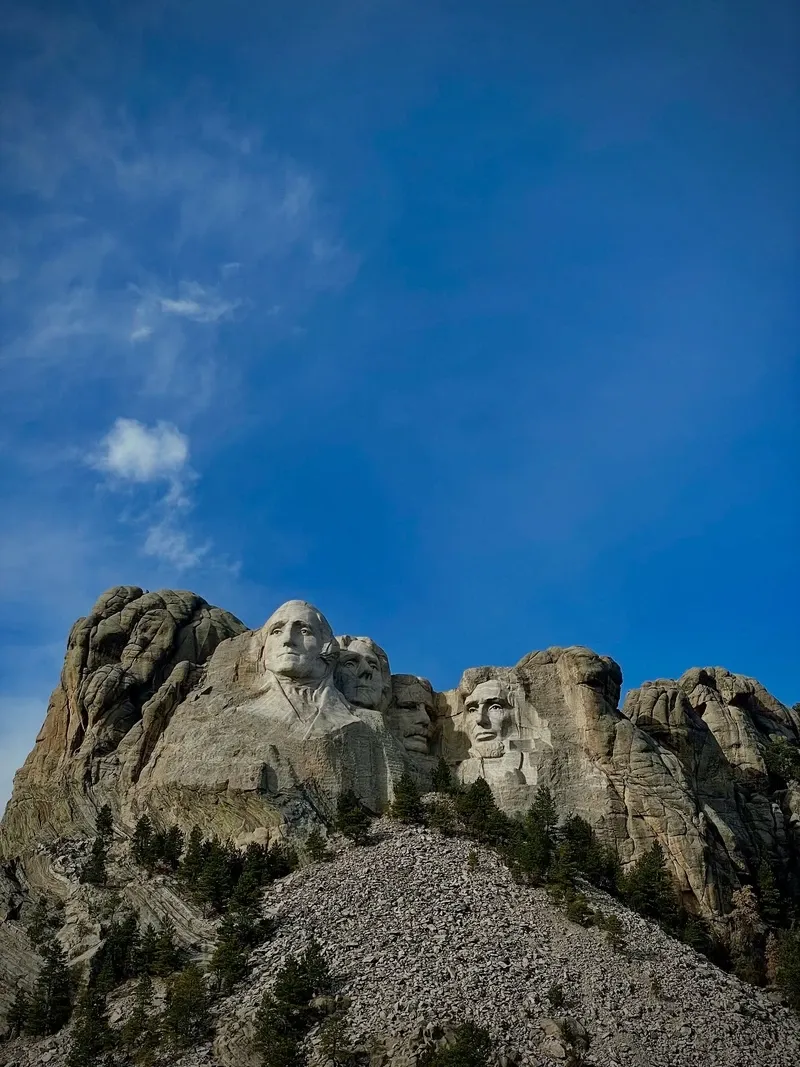
Mount Rushmore consists of fine-grained pegmatite granite, chosen specifically for its resistance to weathering. The mountain represents among the oldest granite outcroppings in the world, pushed up through the earth's crust during the formation of the Black Hills. The exposed granite spine contains fewer cracks than surrounding peaks, allowing it to support the massive weight and intricate details of the 60-foot faces. Each president's nose measures approximately 20 feet long, while their mouths stretch 18 feet wide. The eyes are 11 feet across, featuring 20-inch columns of granite left intact to catch the sunlight and create the illusion of pupils.
Workers removed 450,000 short tons of rock to create the sculpture. Ninety percent of the carved rock was blasted away using precise dynamite charges. The remaining stone was shaped using a technique called "honeycombing," where drillers created closely spaced holes to weaken the granite before breaking it off by hand. The faces look outward from an elevation of 5,680 feet above sea level. The rubble from the blasting remains piled at the base of the mountain, intentionally left as a record of the construction process. The granite erodes at a rate of just one inch every 10,000 years, making the sculpture highly durable.
The 1,278-acre memorial site extends north to Old Baldy Mountain and south to Grizzly Bear Creek. The surrounding ecosystem features dense ponderosa pine forests growing out of thin, rocky soil. The Avenue of Flags leads visitors from the concession building to the Grand View Terrace, displaying the flags of all 50 states, one district, three territories, and two commonwealths of the United States in alphabetical order. The Presidential Trail, a 0.6-mile loop, navigates this terrain with 422 stairs, bringing visitors directly beneath the granite faces. Starting the trail from the Sculptor's Studio requires a strenuous uphill climb, while entering from the Grand View Terrace provides a downhill route. The first 0.2 miles of the trail are paved and wheelchair-accessible, ending at the base of the mountain. Beneath the viewing terrace, the Lincoln Borglum Visitor Center houses a free museum packed with interactive exhibits, including virtual blasting cranes that demonstrate the excavation process.
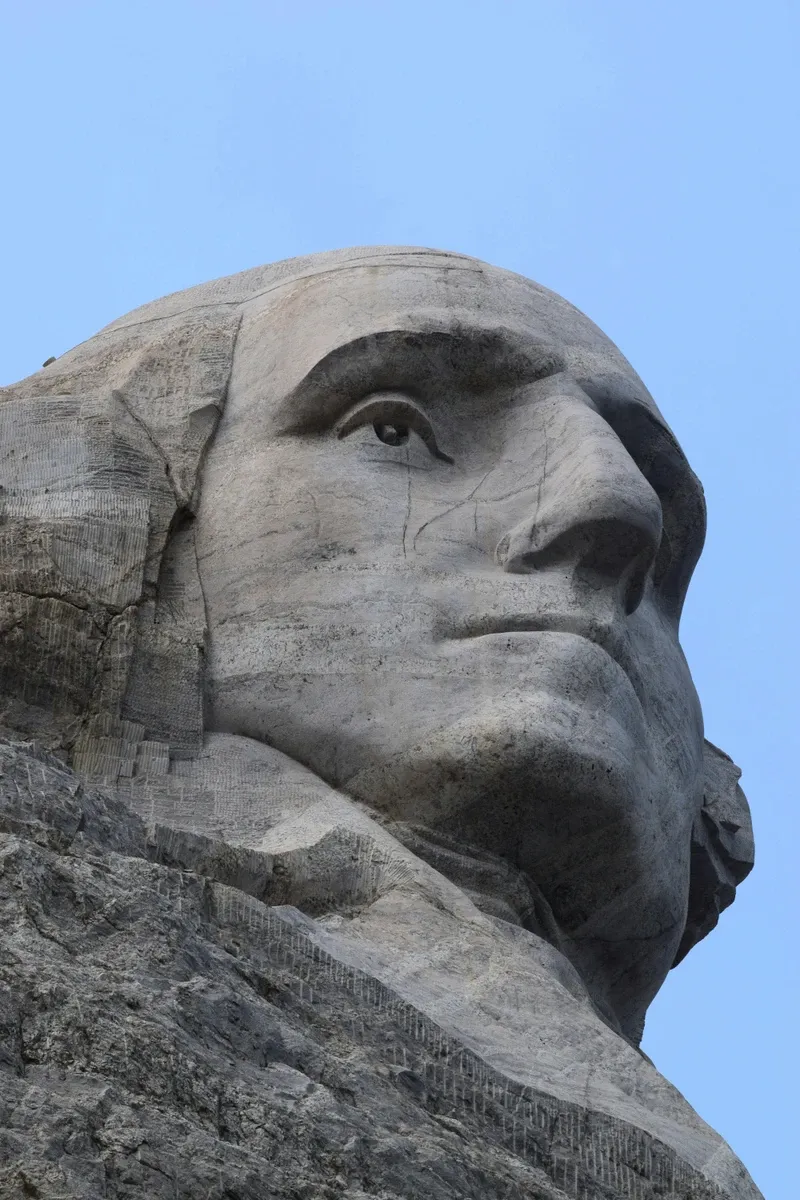
Mount Rushmore stands as a polarizing symbol in the United States. For many, it represents the first 150 years of American history, capturing the nation's founding, expansion, and preservation in solid granite. The site hosts nightly patriotic lighting ceremonies from May to September, complete with flag-lowering rituals and veteran recognitions. The massive faces appear frequently in American cinema, literature, and political discourse as an emblem of democracy. The monument draws 2.5 million visitors annually, anchoring the tourism economy of western South Dakota alongside nearby Custer State Park and Badlands National Park.
The monument occupies land considered sacred by the Lakota Sioux. Before 1885, the mountain was known as Tunkasila Sakpe Paha, or Six Grandfathers Mountain. It functioned as a site for prayer, spiritual devotion, and vision quests. The United States government seized the Black Hills in 1877, violating the 1868 Treaty of Fort Laramie. Carving the faces of American presidents into this specific mountain deepened the insult for Native American tribes. The Supreme Court ruled in 1980 that the land was taken illegally and offered financial compensation, which the Sioux Nation refused, demanding the return of the land instead.
Today, the site operates as a focal point for Native American protests demanding the return of the Black Hills. The memorial grounds include the Lakota, Nakota, and Dakota Heritage Village, where tribal members share stories about their history and connection to the land. Visitors walk past traditional tipis and listen to speakers explain the ongoing legal and cultural battles over Paha Sapa. Thirty minutes away, the Crazy Horse Memorial is being carved into another Black Hills mountain, standing as a direct Native American response to the Mount Rushmore carvings. The Crazy Horse project, started in 1948, refuses federal funding and relies entirely on private donations and admission fees.
Memorial Team Ice Cream serves vanilla made from Thomas Jefferson's original 1780 recipe.
Over 200 mountain goats live on the memorial grounds, descended from a herd gifted by Canada in 1924.
Workers used dynamite to blast away 90 percent of the 450,000 tons of rock removed from the mountain.
Despite 14 years of workers hanging from cliffs with explosives, no fatalities occurred during construction.
Gutzon Borglum originally designed the sculpture to show the presidents carved down to their waists.
The monument uses high-tech LED lights for its nightly illumination to minimize energy consumption and light pollution.
Federal America the Beautiful passes do not cover the $10 parking fee because a private concessionaire operates the garage.
No entrance fee exists, but visitors must pay a $10 parking fee per private vehicle. This parking pass remains valid for one year from the purchase date.
Construction began on October 4, 1927, and concluded on October 31, 1941. The entire project took 14 years to finish.
Gutzon Borglum designed and sculpted the monument until his death in March 1941. His son, Lincoln Borglum, took over leadership to bring the project to completion.
Sculptor Gutzon Borglum selected these four presidents to represent the founding, expansion, development, and preservation of the United States during its first 150 years.
The Lakota Sioux knew the mountain as Tunkasila Sakpe Paha, or Six Grandfathers Mountain. It functioned as a sacred place of prayer and spiritual devotion.
Pets cannot enter the main plaza, the Avenue of Flags, or the walking trails. They must stay within the parking garages and two designated pet walking areas.
The 0.6-mile Presidential Trail loop contains 422 stairs. Visitors wanting an easier walk should start from the Grand View Terrace rather than the Sculptor's Studio.
The parking structure and grounds remain open on December 25th, weather permitting. All visitor buildings, including the museum and cafes, close for the holiday.
Federal passes like the America the Beautiful pass do not cover the parking fee. A private concessioner, Xanterra Travel Collection, operates the parking facility.
No public bus or train services run to Mount Rushmore. Visitors must travel by personal vehicle, rent a car, or book a private guided tour from Rapid City.
Browse verified tours with free cancellation and instant confirmation.
Find Tours